Medical Council Stakeholder Engagement: Tripartite Meetings

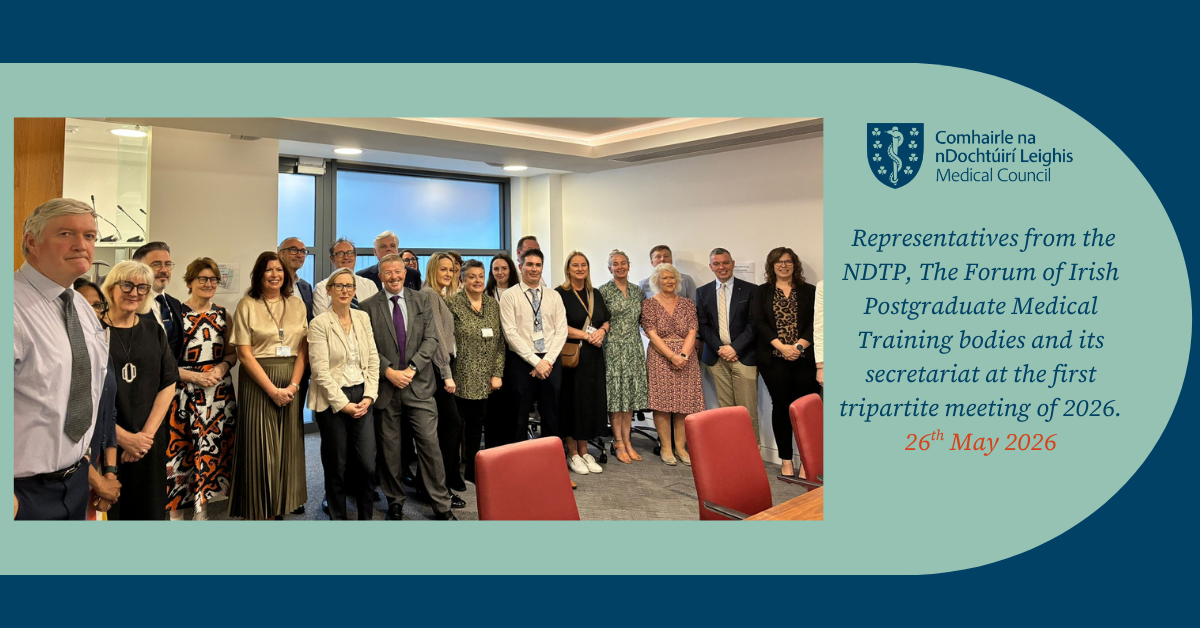
On the 26th of May 2026, the Medical Council welcomed representatives from the NDTP, The Forum of Irish Postgraduate Medical Training bodies and its secretariat to the first tripartite meeting of 2026. The meeting provided an excellent opportunity for stakeholder engagement with several key topics discussed, including some upcoming Medical Council policies, workforce planning and site accreditations.
The meeting explored ways to support better patient safety outcomes by focusing on improving workforce planning, ensuring Medical Council policies address pertinent challenges for the workforce and patient safety demands and discussing how to ensure high standards of accreditation across sites.
Why do Tripartite meetings take place?
The purpose of the Medical Council is public protection, ensuring safe and professional doctors. And the vision we aspire to is a trusted, compassionate and effective regulator of doctors.
We achieve our purpose by delivering our strategic goals through the lens of Right-Touch Regulation, with patient safety at the heart of our work. This means our regulatory actions will always be proportionate, consistent, targeted, and transparent.
Right-touch regulation shapes every core function of the Medical Council, including how we maintain the register, set educational standards, and manage our complaints, investigations and fitness to practise processes. It also shapes how we manage our relationships with our stakeholders.
Tripartite meetings allow us the opportunity to share and discuss the work that we do with our stakeholders, ensuring effective collaboration, building trust and transparency.
What is the purpose of the Tripartite meetings?
These meetings provide an opportunity to facilitate a high-level exchange of information between parties and to discuss areas of mutual interest or concern which underscore a unified commitment to patient safety.
Who was invited to the Tripartite Meeting on 26th May 2026?
In attendance at the meeting were representatives from the Medical Council, NDTP, The Forum of Irish Postgraduate Medical Training bodies and its secretariat. This included Professor Anthony O’Regan, Medical Director of the National Doctors Training & Planning, and Professor Edward McKone, Chair of the Forum of Irish Postgraduate Medical Training Bodies.
The NDTP leads in the provision of key information and analysis of the medical workforce. This work supports the Health Sector in planning for the appropriate levels of trained doctors in the future. This planning in turn guides NDTP’s work with the Postgraduate Medical Training Bodies to facilitate the development and promotion of training programmes to provide a skilled workforce that meets the current and future needs of the Health Service. Other NDTP responsibilities include the Consultant Approval Process and the management of the Doctors Integrated Management E-System (DIME) system and the National Employment Record (NER).
The Forum of Irish Postgraduate Medical Training Bodies (Forum) was established in December 2006 with the aim of supporting the postgraduate training bodies in maintaining the highest standards in Medical Education and Training in Ireland. The postgraduate training bodies, through the Forum, provide a key leadership role in the promotion of a common strategic policy with a shared vision and common goals for excellence in postgraduate medical education and training. Postgraduate medical specialists are key to the effective provision of the Irish healthcare sector.