Blog: Compassion and Innovation: The Future of Healthcare Regulation

The Medical Council is dedicated to safeguarding the health, safety, and wellbeing of the public through rigorous standards of professional conduct and ethics for doctors. Our commitment goes beyond conventional regulation; we are pioneering a compassionate, proportionate, and effective regulatory process that prioritises kindness and empathy. This new approach is encapsulated in our Liaison and Support Services.
Liaison and Support Services: Compassion at the Core

The Liaison and Support Services framework, led by Niamh Dunne, is a critical interface between the Medical Council and its diverse stakeholders. Niamh has consulted with regulators worldwide and stakeholders across Ireland to shape this framework. The aim is to provide support mechanisms that guide stakeholders through the complexities of the regulatory environment with compassion and clarity.
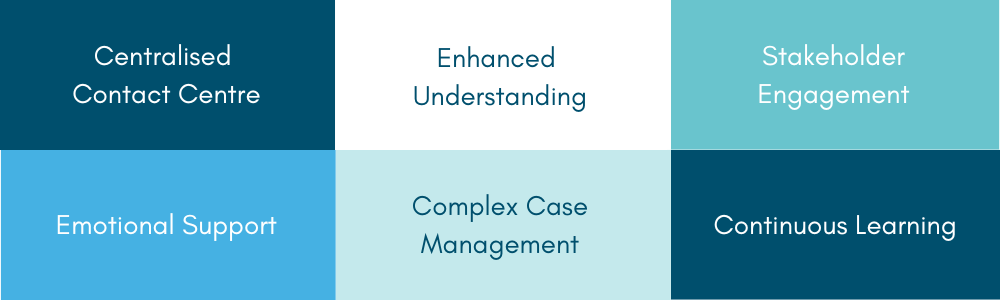
Key Objectives:
-
Centralised Contact Centre: We have established a centralised support centre that efficiently handles all queries. This initiative has significantly reduced call holding times and increased call answering rates, ensuring interactions are managed with empathy.
-
Enhanced Understanding: Improve transparency and public understanding through clear, empathetic communication.
-
Stakeholder Engagement: Build strong, respectful relationships with key stakeholders through targeted outreach and collaboration.
-
Emotional Support: Offer emotional support networks and train staff to interact with kindness and empathy.
-
Complex Case Management: Ensure sensitive cases are managed with fairness and compassion.
-
Continuous Learning: Use data and feedback to continually refine services, fostering a culture of kindness and empathy.
Our strategy is informed by feedback from doctors and patients, emphasising the need for a more compassionate approach. This aligns with global best practices, recognising that regulatory processes can be stressful and should be conducted with empathy and support.
Leading the Way in AI: Ethical Integration and Collaboration

As we strengthen our regulatory framework with kindness and compassion, we are also mindful of the future impact of Artificial Intelligence (AI) on healthcare. The Medical Council is at the forefront of exploring a principles-based approach to the use of AI in professional regulation. In the coming months, we will be working with other regulators in launching a collaborative project to develop guidelines for the use of AI by healthcare regulators and to explore how it can be ethically integrated into medical and healthcare practices.
This work will take place in tandem with leading the Technology and Innovation Taskforce within the Council on Licensure Enforcement and Regulation (CLEAR). This global taskforce focuses on developing international guidelines for AI adoption in professional regulation. With the commencement of the EU AI Act, it is crucial to engage with stakeholders to address the challenges of AI technologies in healthcare.
Exploring a Principles-Based Approach to AI

We will consider adopting a principles-based approach inspired by the timeless ethics of the Hippocratic Oath. This approach would ensure that AI systems are used in ways that prioritise patient safety, enhance care, respect autonomy, and promote fairness and equality.
Conclusion
The integration of AI into healthcare presents a tremendous opportunity to enhance patient care and outcomes. AI can significantly enhance the capabilities of healthcare professionals, providing advanced tools for diagnosis and treatment planning, while ensuring doctors' expertise and judgment remain central. Patients will benefit from more accurate diagnoses, personalised treatment plans, and overall improved care, with transparency and informed consent being crucial for maintaining trust. For the public, AI promises more efficient healthcare systems and reduced costs, provided that privacy, security, and equity concerns are adequately addressed.
However, these advancements bring ethical and practical challenges that must be thoughtfully addressed. The Medical Council is committed to leading the ethical integration of AI in healthcare, ensuring it benefits all stakeholders. While we recognise the importance of developing detailed plans on how AI will be integrated into practice, how potential risks will be managed, and how the Medical Council will involve doctors and patients in this process, we believe it is crucial to first hear the voices of the doctors and the public.
This consultative approach will ensure that our guidelines are shaped by those who are directly impacted, making them more practical and effective in real-world scenarios. Additionally, we are mindful that the EU AI Act has recently been published, which will significantly influence our approach. As such, we are committed to aligning our efforts with this new legislation and ensuring that our strategies are both forward-thinking and compliant with European standards.
By considering a principles-based approach akin to the Hippocratic Oath and prioritising stakeholder engagement, we can navigate the complexities of AI and harness its potential to improve human health and wellbeing, all while maintaining compassion and kindness at the heart of our regulatory processes.
About Paul Byrne

Paul Byrne is the Executive Director of Regulatory Operations and Support Services at the Medical Council. His role encompasses a range of key regulatory functions, including Registration, Education, and Professional Competence. Over the past 19 years, Paul has had the opportunity to work in various public policy areas, including health and social care regulation at CORU and energy regulation in the CRU, all of which have shaped his approach to effective and compassionate regulation.
Beyond his work in Ireland, Paul is actively involved with the Council on Licensure, Enforcement and Regulation (CLEAR), where he chairs the Technology and Innovation Task Force and serves on the board of directors. He is also dedicated to mentoring the next generation of leaders through CLEAR’s Elevate program.