Blog: New Sanctions Guidance

Introduction to Sanctions
The Medical Council recently published its new Sanctions Guidance. This document provides guidance to the Medical Council on the approach to imposing sanctions and the factors it should consider when deciding on the appropriate sanctions to impose. It will also be of assistance to the Fitness to Practise Committee (the "FTPC"), where the FTPC has made findings against a medical practitioner, and is making a recommendation as to the appropriate sanctions in its report to the Council.
The Medical Council believes that it is important to be as transparent as possible, and that the new Sanctions Guidance will also be of assistance to the medical profession, their representatives, and members of the public.
Purpose of Sanctions
The Council's primary objective in imposing sanctions is to act in the public interest. This includes:

Types of Sanctions
In most cases, the sanctions that the Council can impose are as follows:
- An advice or admonishment or censure in writing
- A censure in writing and a fine not exceeding €5,000
- The attachment of conditions to the practitioner’s registration, including restrictions on the practice of medicine that may be engaged in by the practitioner
- The transfer of the practitioner’s registration to another division of the register of medical practitioners (the "register")
- The suspension of the practitioner’s registration for a specified period
- Cancellation of the medical practitioner's registration
- Prohibition from applying for restoration of registration for a period of time.
Approach to Imposing Sanctions
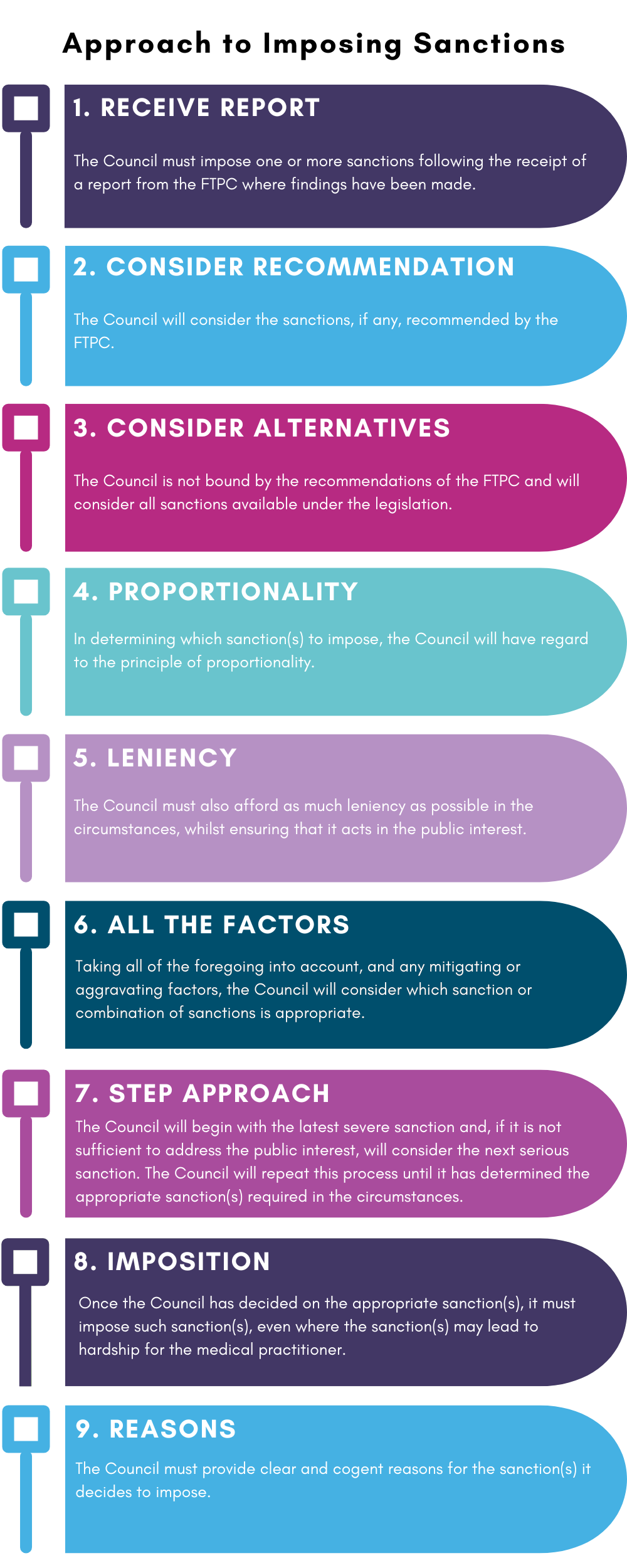
More Information
This guidance also contains more information on:
- Approach to imposing sanctions, proportionality and leniency
- Overview of mitigating factors and aggravating factors
- List of mitigating factors
- List of aggravating factors
- Relevant factors for each type of sanction
- Cases where a more serious sanction may be required
- Decision of the Council and reasons
- Role of the High Court
Dr Suzanne Crowe, President, Medical Council added “One of the important statutory functions placed on the Medical Council is determining a doctor’s fitness to practise following the investigation of a complaint and Fitness to Practise Inquiry. We’re very much aware of the difficulties that can be involved in going through the Fitness to Practise process for both doctors and complainants.
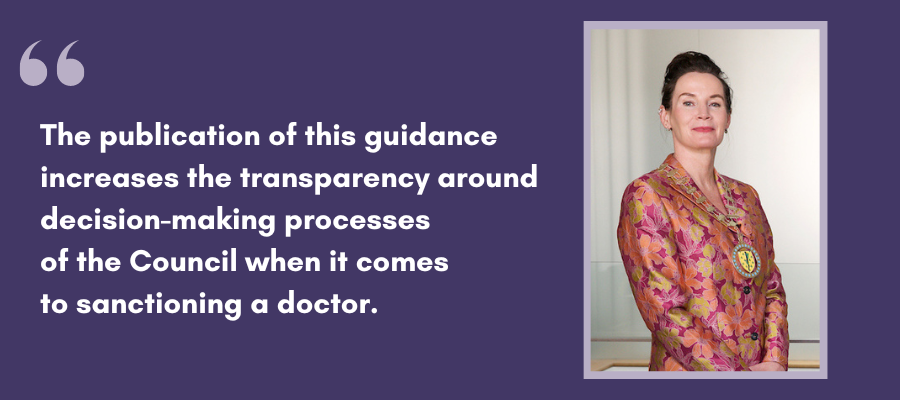
"Indemnifiers are there for doctors to engage with for support, guidance, and representation throughout the Fitness to Practise inquiry process, which is complex and legalistic.”
Read the Medical Council Sanctions Guidance.