Blog: Pride 2024
-(6).png "Pride 2024")
LGBT Ireland Healthcare Conference
As part of #Pride month, Dr Suzanne Crowe, President of the Medical Council, encouraged doctors and healthcare workers to lean into professional development, challenge biases, and advocate for policies that lift up our most vulnerable populations.
The
Medical Council
conducted
research
in
September 2023
on
how the public felt they should be treated in a healthcare setting. A strong majority (89%) of people surveyed believe that one or more minority groups is at risk of receiving sub-standard healthcare. The greatest concerns were for older people (57%), followed by other minority groups including the Traveller community (34%), refugees (33%), and the LGBTQI+ community (14%).
As a board member of LGBT Ireland, Dr Suzanne Crowe spoke at the LGBT Ireland Healthcare Conference 'Bridging Gaps & Building LGBTQ+ Inclusive Healthcare Environments’ at the Royal College of Surgeons in Dublin on Friday 21st June 2024. Dr Crowe highlighted the unique challenges faced by the LGBTQI+ community and other minority groups.
"As I have learned throughout my career, and my work with LGBT Ireland, the LGBTQI+ community is vulnerable. Just like other minority groups; and those coming from different backgrounds, upbringing, sexuality, religion, and ethnicities; The LGBTQI+ community often suffers from mental health issues, low self-esteem, isolation, and loneliness. As doctors, we must not look at physical symptoms in isolation. We must treat the individual holistically, rather than solely pinpointing the condition or illness."
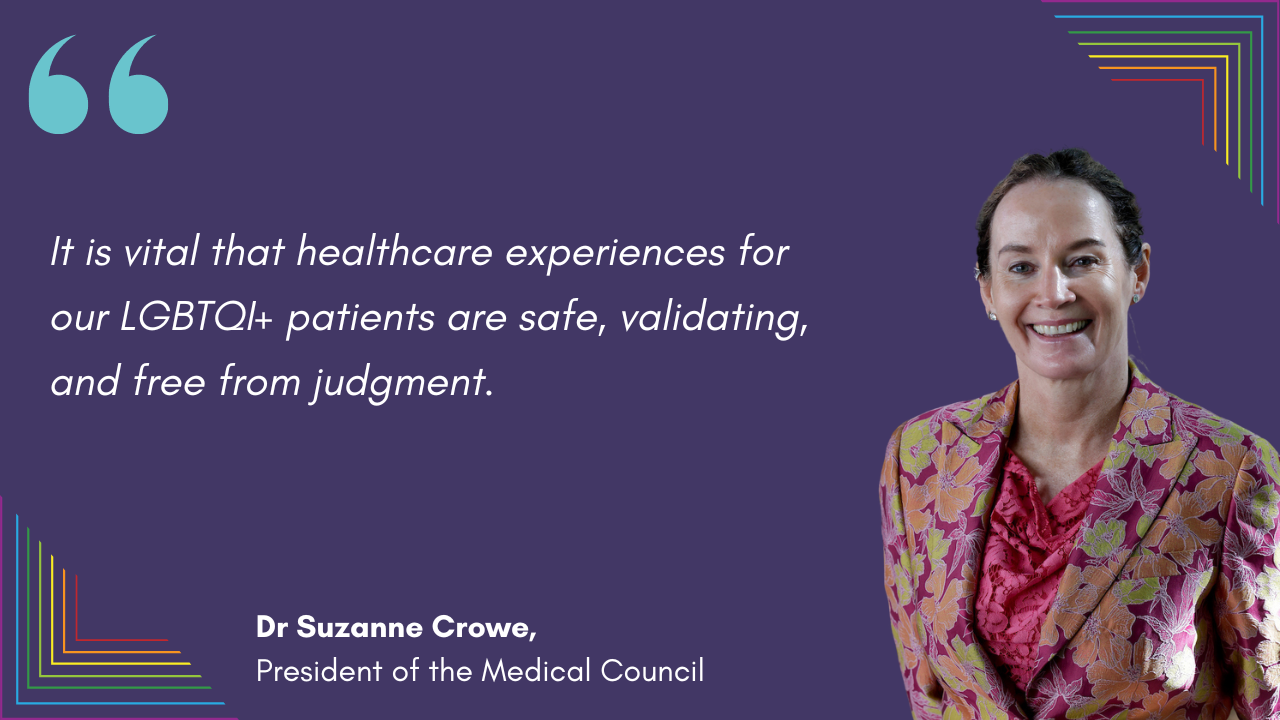
"Those who work in medicine also know that no two patients are the same. Every patient we meet is unique and has their own needs, concerns, and healthcare journey. As healthcare professionals, we must acknowledge that we never know what’s happening on the other side of someone’s front door, in their home, or inside their head. We don’t always know the state of their mental wellbeing – if they’ve suffered from loss, tragedy, bereavement, or mental health issues.
“As thousands of members of the LGBTQI+ community and allies gather this week and at various events nationwide over the summer to celebrate Pride, we must remember as doctors and healthcare professionals that we must be inclusive, and we should avail of the excellent training opportunities that are available to us. We should do this for our patients, for our colleagues, for our families and for our friends
”,
Dr Crowe concluded.
How can I support the LGBTQI+ community as a healthcare professional?
1. Avail of training opportunities
Helpful resources for training and information include:
-
LGBT Ireland
offers a range of services to provide support and information for LGBTQI+ people. The service is also used by individuals questioning if they might be LGBT, as well as the family and friends of LGBTQI+ people, and professionals looking for information.
-
LGBT+ Champions Programme
helps doctors and healthcare professionals better understand the identities and advocate for theneeds of their LGBTI+ patients.These are provided by LGBT Ireland, the HSE, post graduate training bodies, universities, advocacy groups and charities.
-
The RISE (Redefining Institutional Stigma Education) project
, based in RCSI, aims to bridge the gap in stigma education and enhance service providers’ understanding of the barriers to testing, treatment, and prevention by placing those impacted by HIV at the centre of an interactive online learning module. This new innovative online learning module, which has been designed for healthcare professionals and students to address the challenges created by stigma, was launched in recent weeks and is available here.
- The HSE National Social Inclusion Office supports the delivery of LGBTI+ training for HSE staff and funded services to ensure awareness and support of the specific needs of the LGBTI+ community in services through HSELand including:
- LGBT+ Awareness Training – available on HSE Land (delivered by LGBT Ireland)
- An Introduction to Transgender Awareness in Healthcare – available on HSE Land (National Office of Suicide Prevention and TENI)
2. Use inclusive language
Good communication encourages LGBTQI+ patients to be involved in their own healthcare and promotes better health outcomes. Medical practitioners can use inclusive language with patients by addressing
all of their patients by their chosen pronouns.
3. Challenge bias
Health professionals can take steps to address disparities and lessen these barriers. Doctors should ask
open and inclusive questions when taking a patient’s medical history.